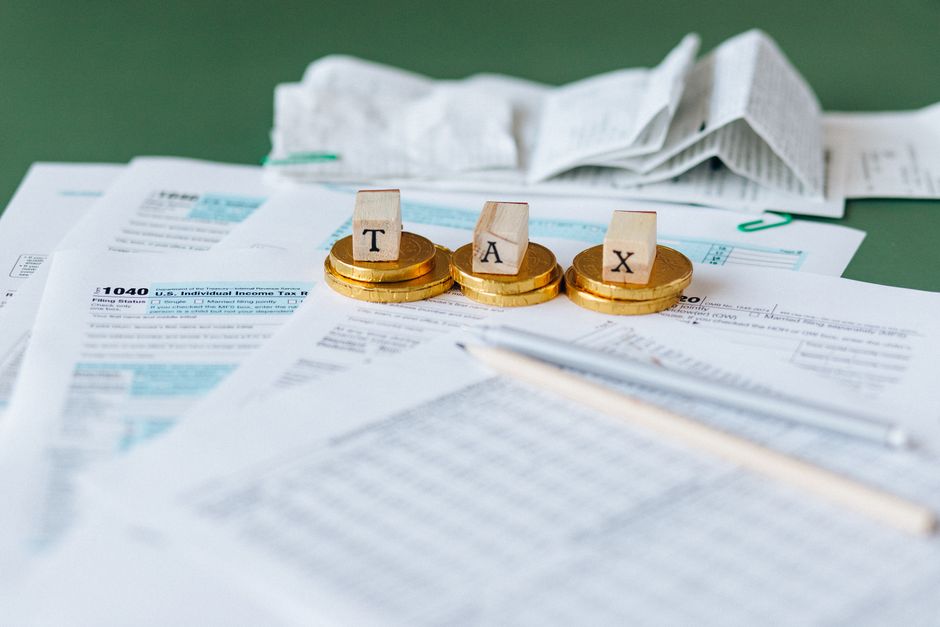
Most college students treat a tax refund like a bonus. A little extra cash that shows up in their account sometime in February or March and disappears just as fast into food, clothes, or whatever Amazon tab they had open. I get it. I’ve been there. But if you’re getting a few hundred dollars back from the IRS, that’s actual capital you can put to work, and doing something intentional with it now will matter more than you think.
I’m not going to tell you to skip your morning coffee. I’m going to tell you what I actually did with mine.
Why a Tax Refund Is a Surprisingly Good Starting Point
The psychological advantage of a refund is that it doesn’t feel like your money yet. You didn’t build your budget around it. You weren’t counting on it to pay rent. That makes it genuinely easier to invest than money you’ve already mentally spent.
That’s not a trick or a mindset hack. It’s just real. Behavioral economics researchers have studied this for years, and the basic finding holds: money we perceive as “found” gets treated differently than our regular income. The smart move is to act before that money gets absorbed into normal spending.
If your refund is somewhere between $300 and $1,200, which covers most college students filing a simple return with one or two W-2s, you’re actually in a pretty decent position to do something meaningful. That’s not going to make you rich overnight. But the compounding on money invested at 20 versus money invested at 30 is not a small difference. Vanguard has run these numbers publicly and the gap over 40 years at a 7% average annual return is enormous.
The question isn’t whether to invest it. The question is where.
The Roth IRA Is Almost Always the Right Answer First
I opened my Roth IRA at Fidelity when I was 19. Put in $400 from my first paycheck that actually felt like real money. The setup took about 20 minutes and was completely anticlimactic. That was the whole point.
If you have any earned income this year, meaning wages from a job, freelance work, or a paid internship, you’re eligible to contribute to a Roth IRA up to the amount you earned or $7,000, whichever is smaller. So if you made $3,500 working part time and you got a $600 tax refund, you can contribute all $600 toward your Roth IRA for this tax year.
The Roth IRA advantage for college students specifically is significant. You’re almost certainly in a low income tax bracket right now, probably 10% or 12%. That means you’re paying taxes on this money at the cheapest rate you may ever pay in your life. The Roth lets that money grow tax free, and you pay zero taxes on qualified withdrawals in retirement. Doing this now, at a low tax rate, is the entire play.
Fidelity has no account minimum to open a Roth IRA and charges $0 commissions on trades. Vanguard is a strong alternative but requires $1,000 minimum to invest in most mutual funds, which can be a real barrier when you’re starting with a few hundred dollars from a refund. I’ve written more about this comparison over at Fidelity vs. Vanguard for Beginners if you want the full breakdown.
Once the account is open, I’d put the money into FSKAX, which is Fidelity’s total market index fund. Zero expense ratio. Tracks the entire U.S. stock market. You’re not picking stocks, you’re owning a slice of everything, and historically that has been the right call for long term money.
What to Do If You Don’t Qualify for a Roth IRA
Not every college student has earned income. If you’re a full time student without a job this year, maybe your parents claimed you as a dependent and you had no wages, you can’t contribute to a Roth IRA. That’s a hard rule, not a loophole you can work around.
In that case, a taxable brokerage account is your next best move. Not as tax advantaged, but still a legitimate wealth building tool. Fidelity and Charles Schwab both let you open one with no minimum. You can still buy FSKAX or a similar total market index fund, and any dividends or gains are taxable, but you have full flexibility with the money if you need it before retirement.
If you’re not sure whether a brokerage account even makes sense for your situation, I’d check out what is a brokerage account and do I need one before making any moves.
One thing I’d mention: do not put refund money into a brokerage account if you don’t have an emergency fund yet. An emergency fund should be sitting in a high yield savings account, not the market. I use Marcus by Goldman Sachs for mine, currently paying 4.10% APY with no minimum balance and no fees. That rate has moved around over the past year but it’s consistently been among the highest offered by major online banks. The rule I use is three months of essential expenses in savings before I touch the market. If you’re below that, split the refund: put enough into Marcus to close the gap, invest the rest.
Avoiding the Mistakes That Actually Hurt You Here
Freshman year I bought one individual stock. A company I thought I understood really well. I sold it at a loss eight months later and never looked back. Index funds don’t have the same story potential but they’ve dramatically outperformed my ability to pick individual winners, and I think that’s probably true for most people my age.
The trap with a tax refund specifically is that $600 feels like enough to make a bold move. It isn’t. It’s enough to start something real, but it’s not enough to make speculation worth the risk. At 21, time is the asset, not the amount. A $600 investment in a total market index fund at 20 is worth roughly $4,500 at 60, assuming 7% average annual returns. That math doesn’t care whether you feel good about the bet.
If you’re using the Chase Freedom Flex or any other cashback card to handle some of your day to day spending, that’s fine, but don’t let a credit card signup bonus distract you here. The Chase Freedom Flex earns 5% on rotating categories and 1.5% on everything else, no annual fee, and a $200 signup bonus after spending $500 in the first three months. That’s real value. But a signup bonus is not an investing strategy, and I’ve seen people spend mental energy chasing rewards that would’ve been better spent just automating their Roth IRA contributions.
The smartest version of this is simple. Refund hits your account, you immediately transfer it to your Fidelity Roth IRA, you buy FSKAX, and you go back to living your life. No research rabbit holes, no stock picks, no timing the market. For more on getting started if you feel like you’re starting from zero, how to start investing in college with no money covers the basics well.
If you want a broader look at which platforms are worth your time, best investing apps for college students is worth a read before you open anything.
The refund is just a starting point. What matters is that it starts something.
Frequently Asked Questions
Q: Can I invest my tax refund if I’m claimed as a dependent on my parents’ taxes? Being claimed as a dependent doesn’t affect your ability to open a Roth IRA or brokerage account. The only requirement for a Roth IRA is that you have earned income of your own equal to or greater than the amount you contribute.
Q: What if my tax refund is only $200 or $300? Is it worth investing such a small amount? Yes, and the math supports it. Fidelity has no investment minimum for FSKAX, so you can invest any amount. Starting small matters less than starting early, and $200 at 20 compounds meaningfully over 40 years.
Q: Should I pay off student loans or credit card debt before investing my refund? If you have high interest credit card debt, meaning anything above roughly 15% APR, pay that off first. Federal student loan rates are typically low enough that investing in a Roth IRA simultaneously still makes sense, at least in my view.
Q: How do I know how much earned income I had this year so I know my Roth IRA limit? Look at Box 1 on your W-2 or your net self-employment income on Schedule SE. That’s your earned income figure. You can contribute up to that amount or $7,000, whichever is lower.
Q: Is it okay to put my tax refund in a high yield savings account instead of investing it? If you don’t have an emergency fund yet, yes, absolutely. Marcus by Goldman Sachs currently pays 4.10% APY with no fees or minimums. But once your emergency fund is covered, keeping extra cash in savings long term costs you the returns you’d get from being invested in the market.
I’m not a financial advisor, just a finance student sharing what I’ve actually done and learned. Do your own research before making any financial decisions.