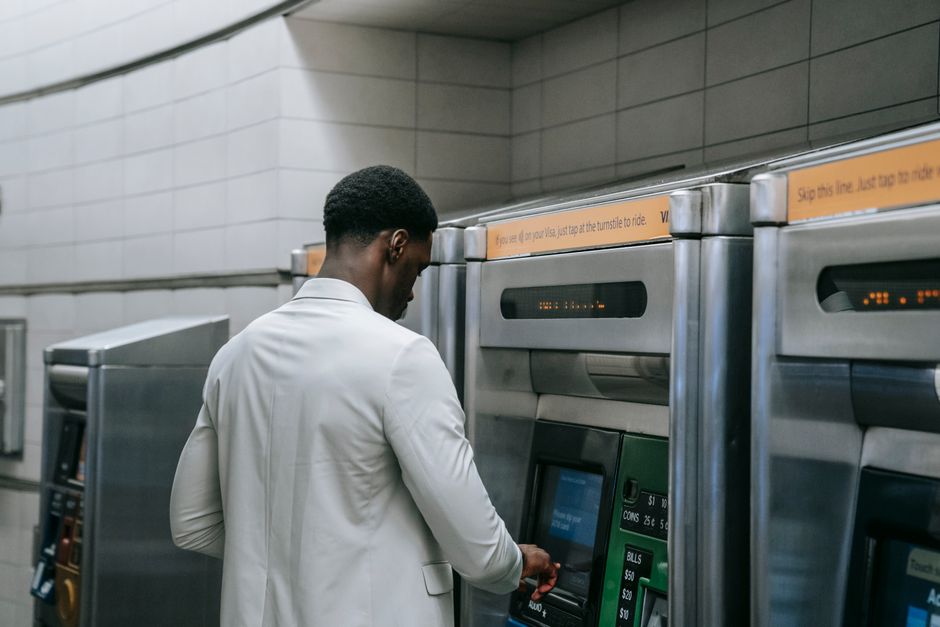
ATM fees are one of those costs that feel small until you actually add them up. A $3.50 out-of-network fee here, a $2.00 surcharge from the ATM owner there, and suddenly you’ve paid $5.50 to access your own money. Do that twice a month for four years of college and you’re looking at over $500 gone. Not to groceries, not to rent, not to anything useful. Just to the privilege of touching cash.
I’m not a financial advisor, just a finance student sharing what I’ve actually done and learned. Do your own research before making any financial decisions.
I caught this problem sophomore year when I switched banks after getting hit with a $12 monthly maintenance fee. When I actually looked at my statement that month, the maintenance fee wasn’t even the worst part. Two ATM transactions had cost me another $11 combined. I was paying to have a checking account and then paying again every time I used it. That was the moment I stopped being passive about banking.
The fix isn’t complicated. It’s mostly about picking the right account and knowing a few workarounds. Here’s what actually works.
Why ATM Fees Add Up Faster Than You Think
There are usually two separate fees when you use an out-of-network ATM. Your bank charges you an out-of-network fee, typically $2.50 to $3.50. Then the ATM operator charges their own surcharge, which runs anywhere from $2.00 to $5.00 at places like airports, bars, or tourist areas. You’re getting charged twice, by two different parties, on the same transaction.
Most college students use cash more than they think. Cover charges at bars, splitting a cab, paying back friends, buying from a food truck that’s cash only. It adds up to maybe two or three ATM withdrawals a month if you’re not careful, which puts you easily in the $15 to $20 range in fees alone.
The banks designed this system knowing most people won’t track it closely. Which is exactly why tracking it even once is worth doing.
The Accounts That Actually Eliminate the Problem
The most direct solution is picking a bank that reimburses ATM fees, charges none of its own, or both. A few actually do this.
Charles Schwab Bank High Yield Investor Checking is the one I see recommended most often by people who’ve thought about this seriously, and the reputation is earned. No monthly fees, no minimum balance, and unlimited ATM fee reimbursements worldwide. The APY on the checking account is modest, sitting around 0.45%, but that’s not the point of a checking account. The point is that you can walk up to any ATM on earth and Schwab will refund whatever the surcharge was, usually within a few days. It requires opening a linked Schwab brokerage account, but there’s no minimum balance required for that either.
Ally Bank doesn’t charge out-of-network fees on its own end, and it reimburses up to $10 per month in ATM surcharges from other operators. That covers most months for most people. The checking account earns around 0.10% APY currently, which isn’t exciting, but Ally’s savings account pays around 4.20% APY, which is one reason I’ve looked at their ecosystem seriously. Their app is genuinely good.
SoFi Checking and Savings bundles checking and savings together and gives you access to the Allpoint network, which has over 55,000 fee-free ATMs. If you set up direct deposit, the account pays 0.50% APY on checking and 4.50% APY on savings. Without direct deposit those numbers drop, so this one rewards you for actually using it as your primary account.
Discover Cashback Debit takes a different angle. Instead of ATM reimbursements, it gives you 1% cash back on up to $3,000 in debit card purchases per month. No monthly fees, no minimum balance, and access to the Allpoint network for free ATMs. It’s not the right fit if you need heavy ATM access, but if you mostly pay by card, the cash back is genuinely useful. I’ve had a Discover card since freshman year and the customer service has always been solid.
If you want more detail on how these accounts compare overall, I laid out a fuller breakdown in my post on best bank accounts for college students.
Free ATM Networks and How to Use Them
Even if you don’t switch banks, you can dramatically cut ATM fees just by knowing which networks are free for your account.
The two biggest surcharge-free networks are Allpoint and MoneyPass. Allpoint has roughly 55,000 locations across the U.S., with machines inside CVS, Walgreens, Target, Kroger, and other chains you’re already walking into. MoneyPass has around 40,000 locations and overlaps with a lot of credit unions and regional banks. Before you ever use a random ATM, it takes about 20 seconds to pull up either network’s locator and find the nearest free machine.
Most major banks have their own ATM locators in their apps too. Chase has a solid one built into their app, which I use since I have a Chase Freedom Flex. The network is extensive enough in cities that I rarely need to go out-of-network.
The campus angle is worth mentioning too. Almost every university has at least one ATM tied to whatever bank they’ve partnered with, and it’s usually free for account holders of that bank. Worth checking what’s actually on your campus before assuming you’re stuck paying fees everywhere.
Other Ways to Get Cash Without Touching an ATM
Cash back at checkout is genuinely underused. When you’re at a grocery store, Walmart, Walgreens, or most pharmacies, you can add cash back to a debit card purchase with no fee at all. You’re already buying groceries, so asking for an extra $20 or $40 back costs you nothing. The limit varies by store but is usually $100 to $200.
This changed how I think about ATMs entirely. I haven’t used a random ATM in months because anytime I actually need cash I just time it with a grocery run. It’s not a dramatic life hack, it’s just a slightly smarter habit.
Peer payment apps also reduce how often you need cash in the first place. If someone owes you money, Zelle transfers are instant and free between most major bank accounts. Venmo is fine too, though the instant transfer to your bank costs 1.75% (minimum $0.25, maximum $25). If you’re trying to be precise about fees, there’s a real difference between the two. I went through the comparison in detail over at how to send money to friends cheaply: Venmo vs. Zelle.
The broader point is that cash is becoming less necessary for most daily transactions. When I was living on $3,800 take-home in New York last summer with $2,100 going to rent, I was extremely deliberate about where every dollar went, and cash was maybe 5% of my actual spending. Most things can go on a card and get tracked automatically.
That said, cash still matters for certain situations in college. Small local businesses, splitting things quickly, tipping in cash. Having a plan for getting it without paying $5 to do so is worth five minutes of setup.
Frequently Asked Questions
Q: What’s the single best bank account for avoiding ATM fees in college? Charles Schwab Bank High Yield Investor Checking is the most flexible option because it reimburses all ATM fees worldwide with no monthly fee and no minimum balance. If you travel or live somewhere with limited ATM coverage from major networks, it’s hard to beat.
Q: Can I avoid ATM fees without switching banks? Yes, mostly. Learn which free ATM network your current bank participates in, use cash back at checkout instead of ATMs when possible, and use Zelle or similar apps to reduce how often you actually need physical cash. You might not eliminate fees entirely, but you can get close.
Q: Does using cash back at checkout cost anything? No. Cash back at checkout on a debit card purchase is free at most major retailers including Walmart, Target, Walgreens, and Kroger. There’s no fee from the store, and your bank doesn’t charge for it either. You’re just withdrawing your own money as part of a transaction you’re already making.
Q: What if my bank charges me a fee even for in-network ATMs? That’s a sign you’re in the wrong account. A checking account that charges fees for standard ATM use or requires a minimum balance to waive monthly fees is costing you money for no good reason. There are enough genuinely free options now that there’s no reason to stay with an account that nickels and dimes you.
Q: Are ATM fees tax deductible for college students? No, not for personal use. ATM fees on a personal checking account are just a personal expense. If you’re self-employed and using the account for business purposes there might be an argument, but for most college students it’s not deductible. Just avoid the fees in the first place.